Well, I will miss this lens. I just let it go today with the 2x teleconverter. A beautiful lens. An art of optics.
Meanwhile, I decided to purchased the Sigma 24-70mm f2.8 anyway as I am going to Costa Rica soon. That and my 18-200mm will be fighting for the walk-around lens title. I am worried about humidity.
Showing posts with label vivitar. Show all posts
Showing posts with label vivitar. Show all posts
Wednesday, October 22, 2008


Sunday, October 12, 2008
Macro photography
 Well, I was not planning to do any shooting today although the idea of another hiking trip was very appealing in this 25C temperature, but a buzzing noise was hovering over to my right in my bedroom. The last time I heard that buzzing was from a wasp that managed its way into my room a few weeks ago. I wondered where it came from. Well, today, I see two of them. I think there is a hole in my new window frame and their nest is somewhere close, very close.
Anyways, I decided to test the macro capability of my Vivitar
 70-210mm. Alone, it can produce 1:2.2 real life ratio. Added the 2x teleconverter I have, I can whip up a near real life macro shot, at 1:1.1. I took a few shots of the wasp but I had set the shutter speed too slow at 1/10 secs so the pictures turned out a little blurry. I did however get a couple of shots at 1/320 secs. I also tested my 50mm lens with one 50mm extension tube to take a few shots of the wasp.
 The first four shots are from the Nikkor 50mm. The last two on the right are from the Vivitar 70-210mm. The original photos have been resized to 1024x685 but they are not cropped so what we see here is what filled the sensor screen. With either lens, you have to get to about 10 cm of the subject. It was a little unnerving to get so close to a wasp (as I had been stung once) but this one was very gentle.
For these shots, I had to use the external speedlight set on Manual
 mode as the built-in flash is too low -- the Vivitar lens is almost a foot long. In Manual mode, the speedlight does not talk with the camera so it was a little painful trying to figure out the right setting without a light meter. I wish I had a D300 or one of the other professional DSLRs that can meter with the manual lenses. I had to take a few shots and adjusting power output level of the fash, before getting the right exposure.
The lens aperture was set between f/8 and f/22. The speedlight
 was set somewhere between 1/128 to 1/1 depending on the shutter speed I used.
For most of the shots at f/16 or f/22, the power output from the flash was set to 1/1. I just cannot remember which photos were shot at minimum aperture but the last two photos were shot at f/16.
So, which lens do I prefer for macro photography? I have to say, the old 1975 Vivitar lens was easier to use. At whatever aperture I dialed, you could still view the subject clearly in the viewfinder -- the Vivitar lens is a bigger, wider lens than the 50mm so
 at f/22 the Vivitar aperture is the same size as the Nikkor 50mm lens at f/8. That is, the Vivitar can gather a vast amount of light even at f/22. With the Nikkor 50mm, without background light, it may be impossible to see what you are shooting. So, for this reason, I prefer the Vivitar and while I had the intention to sell it because I hardly ever used it, I will keep it for macro photography now.
Saturday, September 20, 2008
Vivitar 70-210mm f3.5
My Series 1 Vivitar 70-210mm f3.5 FX lens has been sitting on the sideline ever since I acquired the 80-400mm Tokina. The truth is, it is heavy (weighting a whopping 0.879 kg) and it is manual focus. I ended up using a lighter and easier lens for telezoom shots.
Today, I got curious about flash and the manual lenses. I wondered how I could use flash with a manual focus lens. Whenever I trie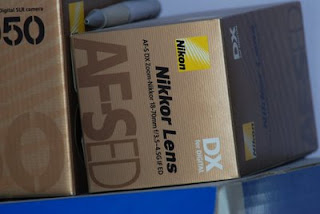 d an MF lens, the flash icon on my LCD would blink, telling me it cannot activate the built-in flash. Well, today, I decided to shoe in my SB-800 speedlight, as I know it can be operated in manual mode. In manual mode, you set the output strength and the flash fires when the shutter opens. Simple operation. I then got curious. Can my D80 set the built-in flash to manual mode as well? I kicked myself in the butt after looking up the menu. Truth be told, my memory is getting rusty because I have looked at this menu before. The option to turn on manual mode is there, I just forgot about it. So now I could simply use the built-in flash in many situations with MF lenses. I am getting off tangent ...
So, I wanted to test my Vivitar lens again because I forgot how good or bad it was. The lens is still in perfect condition. The lens bod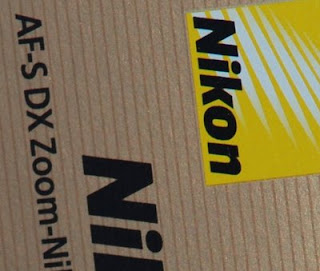 y is made out of real metal, hence its weight, unlike most of the new plastic lenses made today. The body feels cold because of the metal and the glass looks pristine clean. In my room, I took a few shots with it with manual flash at ISO200, 210mm, f/9. I must say I am impressed with what a piece of 1975 techno craft can do. The image came out nearly task sharp. You sharpen it up a little in Photoshop (or Irfanview what I use) and the image is crystal clear.
The first image is from the Vivitar, image resized to 1024x685. It is shot of a set of boxes of a D50 and Nikkor AF-S 18-70mm lens that my older brother bought a few years ago. The second image is a crop at maximum resolution from the original 3872x2592 JPEG image. The images look very clean and sharp.
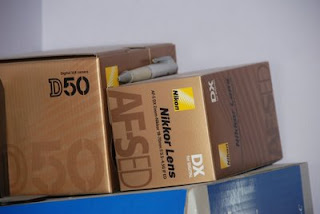
The third image is from my Nikkor 18-200mm DX lens. It was shot at ISO200, 200mm, f/5.6 with the built-in flash set to TTL. As far as image quality is concerend, there is no difference that I can see between this shot and the Vivitar shot. There is one thing to notice here though. At 210mm, the FX Vivitar looks more like a 300mm DX lens.
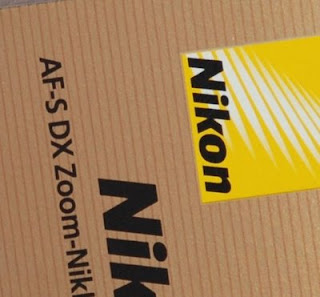
The fourth image is a crop at maximum resolution of the Nikon shot. The crop is slightly different. The Vivitar crop is sharp but has more noise than the Nikkor crop. However, it is probably due to lower flash output than the Nikkor TTL shot.
The Vivitar lens is a really nice and sharp lens. It is a legacy lens manufactured by Kiron for Vivitar back in 1975. I like this classic of classics. I want to sell the Vivitar lens though so I can put the money toward a better lens. Perhaps I will take it out a few times first. It will be sad to see it go, if anyone will still want to buy this piece of art.
Today, I got curious about flash and the manual lenses. I wondered how I could use flash with a manual focus lens. Whenever I trie
 d an MF lens, the flash icon on my LCD would blink, telling me it cannot activate the built-in flash. Well, today, I decided to shoe in my SB-800 speedlight, as I know it can be operated in manual mode. In manual mode, you set the output strength and the flash fires when the shutter opens. Simple operation. I then got curious. Can my D80 set the built-in flash to manual mode as well? I kicked myself in the butt after looking up the menu. Truth be told, my memory is getting rusty because I have looked at this menu before. The option to turn on manual mode is there, I just forgot about it. So now I could simply use the built-in flash in many situations with MF lenses. I am getting off tangent ...
So, I wanted to test my Vivitar lens again because I forgot how good or bad it was. The lens is still in perfect condition. The lens bod
 y is made out of real metal, hence its weight, unlike most of the new plastic lenses made today. The body feels cold because of the metal and the glass looks pristine clean. In my room, I took a few shots with it with manual flash at ISO200, 210mm, f/9. I must say I am impressed with what a piece of 1975 techno craft can do. The image came out nearly task sharp. You sharpen it up a little in Photoshop (or Irfanview what I use) and the image is crystal clear.
The first image is from the Vivitar, image resized to 1024x685. It is shot of a set of boxes of a D50 and Nikkor AF-S 18-70mm lens that my older brother bought a few years ago. The second image is a crop at maximum resolution from the original 3872x2592 JPEG image. The images look very clean and sharp.

The third image is from my Nikkor 18-200mm DX lens. It was shot at ISO200, 200mm, f/5.6 with the built-in flash set to TTL. As far as image quality is concerend, there is no difference that I can see between this shot and the Vivitar shot. There is one thing to notice here though. At 210mm, the FX Vivitar looks more like a 300mm DX lens.
The fourth image is a crop at maximum resolution of the Nikon shot. The crop is slightly different. The Vivitar crop is sharp but has more noise than the Nikkor crop. However, it is probably due to lower flash output than the Nikkor TTL shot.

The Vivitar lens is a really nice and sharp lens. It is a legacy lens manufactured by Kiron for Vivitar back in 1975. I like this classic of classics. I want to sell the Vivitar lens though so I can put the money toward a better lens. Perhaps I will take it out a few times first. It will be sad to see it go, if anyone will still want to buy this piece of art.
Subscribe to:
Posts (Atom)
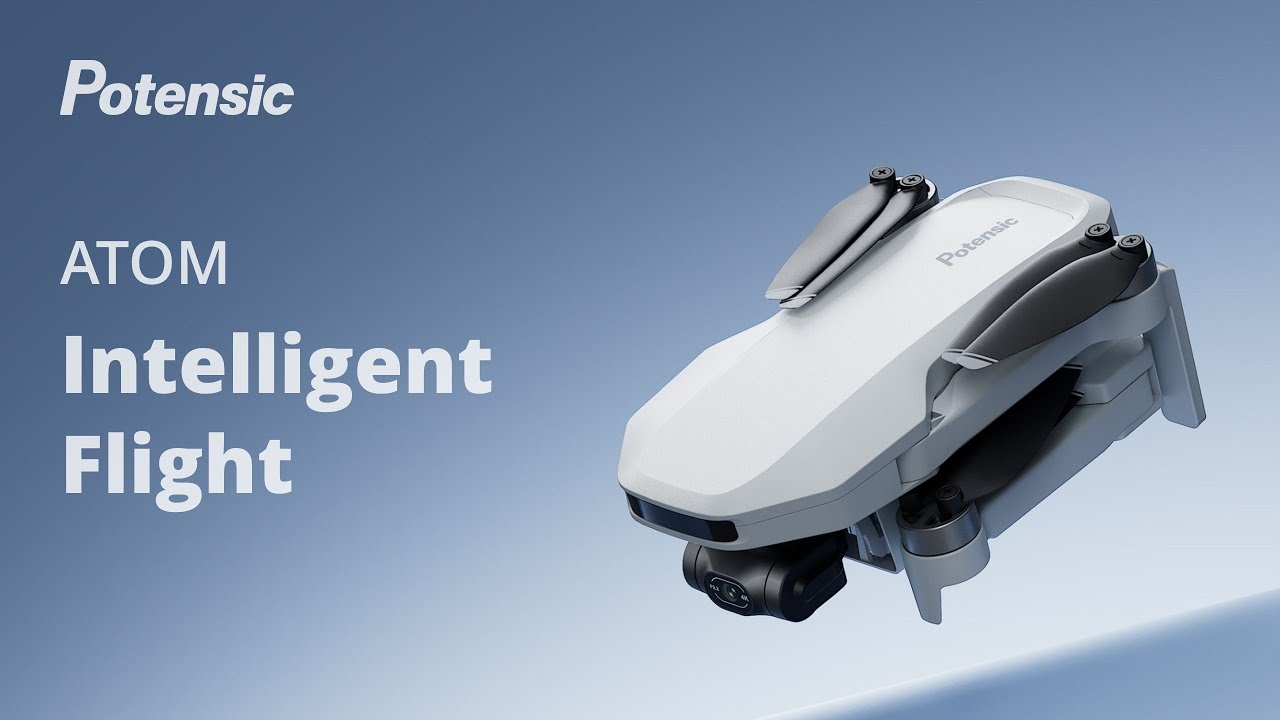
Potensic Atom Follow-Me Mode
The Potensic Atom's Follow-Me mode is one of its "intelligent flight" modes. It's a really nifty feature that uses visual...
-
A local Zellers store is having liquidation sales of everything in the store. I was browsing through some electronics the other day--not pl...
-
So I decided that I will do an experiment. I will offer a few free photography shoots in my area for small events. I will see if the quali...
-
 I am starting to get used to shoot with a 50mm alone. For a long time, I have always trusted my Nikkor 18-200mm f/3.5-5.6 VR lens. I would...