Showing posts with label Lumix. Show all posts

Monday, May 30, 2011

Panasonic Lumix DMC-FZ30 in the field

Here are the first few shots I took with this camera. One thing I noticed immediately is how much lighter it is than the D7000--a good thing I guess. The second thing I noticed is how weird it is to use an electronic viewfinder. The third thing I noticed is how annoying it is to take a picture and not be able to view it immediately after with the push of a button--you have to dial to the preview mode before you can review any photo. The fourth thing is, the photos are sharp when the camera locks on its subject. Lastly, and this is to confirm many complaints, is that it is a bit noisy but it's really not all that bad during the day. There is enough light to fill every pixel with a vast amount of light, except in deep shadows.

The following photos were unprocessed, except that they have been resized (I uploaded them to Flickr) so you don't really get to see 100% of the pixels.


Sunday, May 29, 2011

Panasonic Lumix DMC-FZ30


Well, I just purchased a used Panasonic DMC-FZ30 "bridge" camera. Why would I do that, you might ask, given that I already have a Nikon D7000 and a bunch of lens and gears that come with DSLR's. Well, I decided that the 35-420mm (35mm equivalent) superzoom lens of the DMC-FZ30 would be great for camping and the everyday photography I cannot do with my old Canon Powershot SD110. My DSLR gears are a bit heavy for the sort of camping I like to do and the Canon is just not far reaching enough for the normal daily needs and my Canon batteries are nearly dead. This "bridge" camera will do well for most of my camping purposes and will serve well in my daily trips into and out of Toronto.

Some nice features of the DMC-FZ30 that I like are:

- the 12x zooming happens internally inside the lens barrel, so the lens does not extend in and out
- optical image stabilization
- the camera with the lens is lighter than the D7000 alone
- it handles a bit like a DSLR and has a dial mode for aperture-priority along with the other modes found in DSLR's
- supports an external flash (I wonder if any of my flash guns will work with it)

Now, this camera is not the best camera you can find. The main problem that many people have raised is the picture quality in low light conditions--it can get noisy. Well, it's not going to be much of a problem for me. I am basically replacing my other point-and-shoot with this so it is a step up any way I look at it. Also, it was dirt cheap. I picked it up for $65 with a UV lens filter and two batteries--the camera used to be $700 six years ago. For what it can do and for the price I paid for, I think it's worth every penny I spent.


Wednesday, September 17, 2008

Bridging two worlds

If the Nikon D90 is any indication that the two worlds of DSLRs and point-and-shoot systems are gravitating toward one another, we are soon enough going to see more such devices that might redefine social status in the camera world.

Just a week ago, Panasonic revealed its newest camera, the Lumix DMC-G1. I saw two articles describing it as the smallest and lightest DSLR camera in the world. Ok, I was intrigued so I had to read more about it. Yes, it was definitely smaller and lighter than any DSLR. However, by definition, a DSLR is a Digital Single-Lens Reflex camera. There is a single lens that light shines through and what we see through the optical viewfinder is what the film or digital sensor captures. (That is, what you see is what you get, sort of.) This is possible because of a reflex mirror that reflects light to the optical viewfinder. The reflex mirror flips up when the shutter button is depressed and an image is taken on the film or digital sensor.

The Limux DMC-G1 does not have a reflex mirror nor does it have an optical viewfinder. The lack of the mirror, the pentaprism, and the optical viewfinder allows for a lighter and smaller camera design. To describe the Limux DMC-G1 as a DSLR is thus not correct. What is it then? It works exactly like a point-and-shoot camera with the ability to change lenses -- but some point-and-shoot cameras already have this feature. The difference however is that the Limux DMC-G1 can use normal DSLR size lenses whereas the other point-and-shoot cameras use special smaller point-and-shoot lenses. Also, with a bigger DSLR size sensor, the Limux will capture higher quality images than the smaller point-and-shoots.


So, the Limux DMC-G1 is an expensive point-and-shoot camera that has a mount for normal DSLR size lenses. The gap between the two worlds is collapsing quickly but will the performance of these DSLR looking designs ever rival the more advanced true DSLRs?

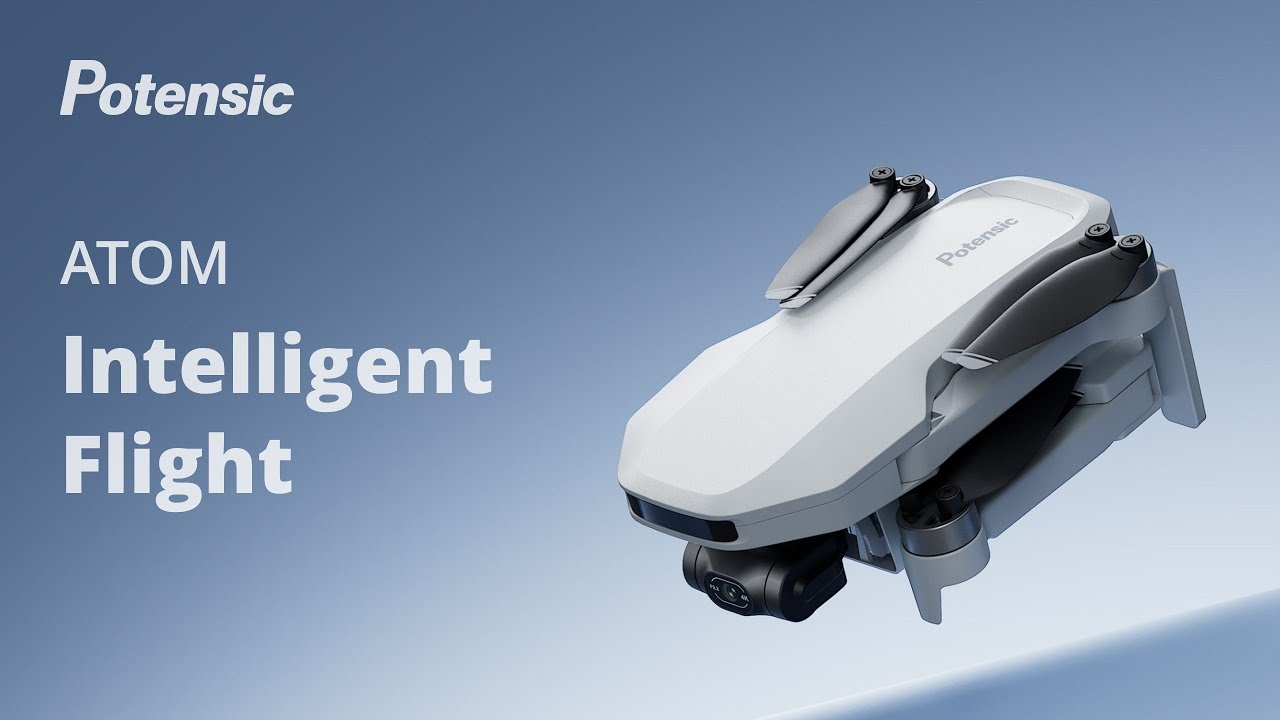
Potensic Atom Follow-Me Mode

The Potensic Atom's Follow-Me mode is one of its "intelligent flight" modes.  It's a really nifty feature that uses visual...